
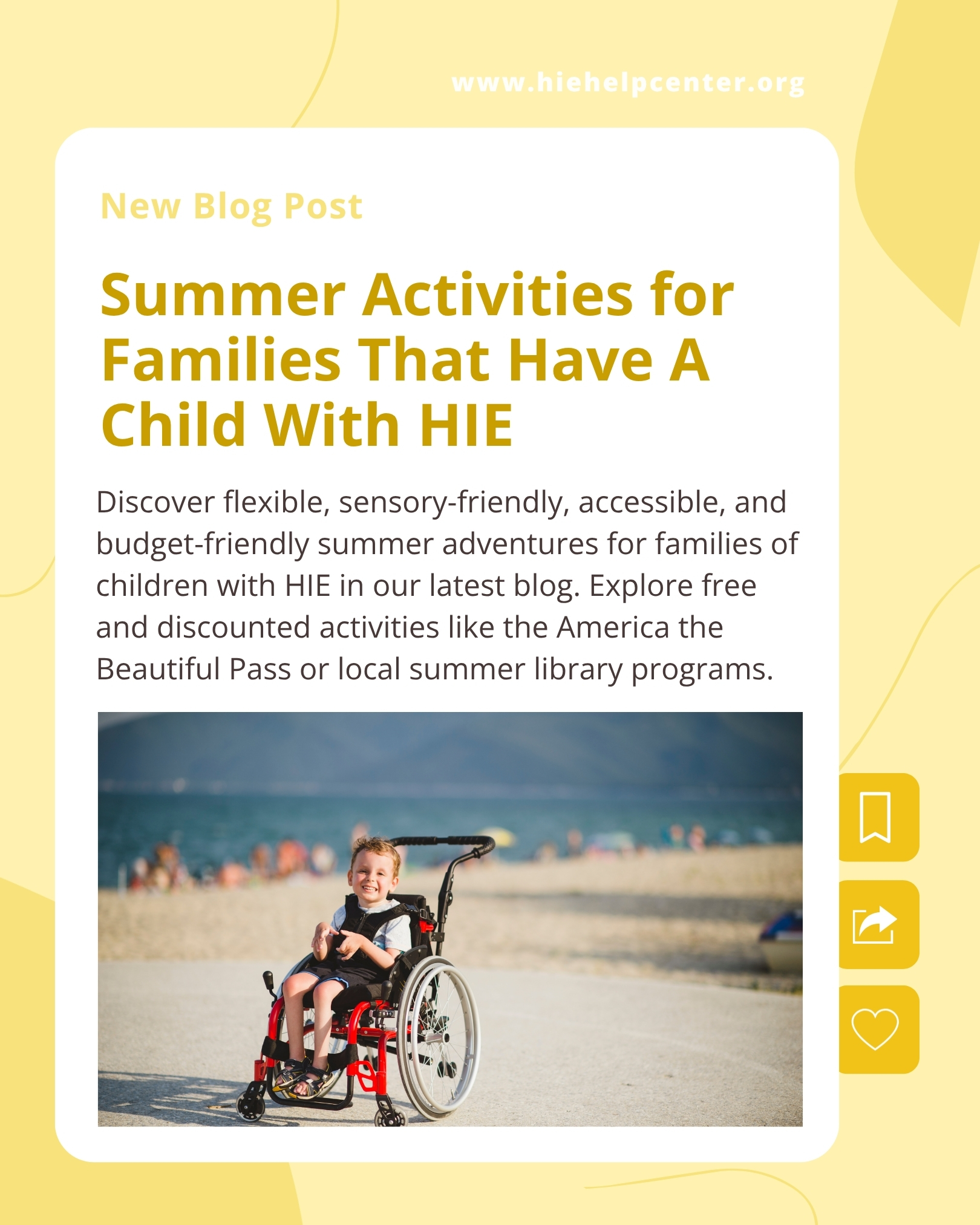
When a child has HIE, it can be challenging to find the right summer activities for your family. We have put together a list of flexible, sensory-friendly, accessible, and low-cost local excursions. You might be surprised to learn how many free or discounted opportunities are available through libraries, parks programs, and disability-access initiatives!
1. Get the America the Beautiful Access Pass
A valuable resource for many families is the free, lifetime America the Beautiful Access Pass.
Who is eligible? What does this pass get my family access to?
The pass is available to any U.S. citizen / resident with a permanent disability and provides free access to national parks and federal recreation sites. Depending on the location, it may also provide discounts on camping and some recreation fees. The pass covers entrance fees at sites managed by the National Park Service, U.S. Forest Service, Bureau of Land Management, U.S. Fish & Wildlife Service, and other federal agencies.
How can I get the America the Beautiful Access Pass?
As the guardian of a person with the disability, you can obtain a lifetime pass on the behalf of your child either in person or online. In order to receive your card, you will need to provide:
- Valid photo ID such as a U.S. passport, driver’s license, or state-issued ID and
- Documentation of permanent disability with a statement by a licensed physician, which includes the following information:
- That the individual has a permanent disability
- That their disability severely limits one or more aspects of their daily life, and
- The nature of those limitations
The America the Beautiful Access Pass is completely free for individuals with permanent disabilities, which includes children with HIE! This pass covers the pass holder and often everyone in the vehicle at many parks.
What can I use my pass for?
- Scenic drives through national parks
- Accessible nature trails
- Wildlife viewing
- Junior Ranger programs
- Visitor centers with air conditioning and educational exhibits
- Ranger-led programs
2. Check Out Free State Park Passes (and more!) from Your Library
If you have a library card, you might not have known that you have access to tons of great passes for free! Local Reddit forums can provide insight from like-minded parents. In a thread we found, commenters suggested asking your librarian about their lending programs for:
- State park passes
- Museum passes
- Zoo passes
- Aquarium passes
- Botanical garden passes
- “Adventure pass” programs
- Children’s museum passes
- Recreation passes
- Culture passes
Library pass programs vary by state and county, but many families save hundreds of dollars each year this way. Libraries around the country are continuing to expand these programs and your local branch can provide a more comprehensive list of their particular offerings.
3. Attend Library Summer Programs
Libraries are a great resource during the summer months, and not only for borrowing books and free activity passes! Libraries often offer:
- Story times / story hour
- Music programs
- Sensory-friendly events
- Craft sessions
- Animal encounters
- Reading challenges
- STEM activities
Many programs are free and air-conditioned, making them excellent options for summer activities.
4. Explore Accessible State Parks Near You
Many state parks have:
- Wheelchair-accessible trails
- Paved nature paths
- Accessible playgrounds
- Adaptive fishing piers
- Accessible visitor centers
- Sensory-friendly nature programs
Consider checking your local state’s parks website before visiting for the most up-to-date accessibility guides. You can also drop by the visitor center (usually near the entrance of the park) to speak with a park ranger about the best options for your family.
What kinds of accessible activities are available at state parks?
- Nature scavenger hunts
- Bird watching
- Picnic lunches
- Stream/creek exploration
- Short sensory walks
- Watching sunsets and wildlife
To find an accessible nature walk near you, the National Park Service has interactive visitor maps that you can filter to find camp sites, trails and more by selecting the “Accessibility Info” section.
5. Visit the Zoo Early in the Morning
Zoos can be great for children with HIE because:
- Walking can be done at your own pace
- Cooler temperatures and less crowds
- You can point out familiar animals from books, tv shows and movies
- Many zoos have accessible pathways
- There are frequent opportunities for breaks / places to sit
- You can often bring in your own food, snacks, and drinks from home
Tips:
- Arrive when the zoo opens
- Bring noise-reduction headphones if needed
- Use adaptive strollers or wheelchairs if helpful
- Focus on just one or two exhibits rather than trying to see everything, every time
- Buy a family pass for the upcoming year when they go on sale around the holidays
6. Explore Local Farmers Markets
Farmers markets are often free and surprisingly engaging. While mostly offered during the summer, you might find some locally during spring and fall as well.
Children can:
- Listen to live music
- Watch demonstrations from local vendors
- Try fruit and veggie samples
- See different kinds of flowers and vegetables
- Practice communication and social skills
- Participate in children’s activities
7. Visit Accessible Playgrounds
Search online using terms like:
- Inclusive playgrounds near me
- Universal-design playgrounds
- Accessible playgrounds
Features may include:
- Wheelchair-accessible surfaces
- Adaptive swings
- Sensory play stations
- Communication boards
- Quiet spaces
Accessible playgrounds can be much more welcoming for children with disabilities that affect their motor, sensory, or communication skills.
8. Splash Pads and Water Play
During the summer months, many cities offer free:
- Splash pads
- Spray grounds
- Community water parks with accessible features
Benefits include:
- Cooling off
- Sensory input
- Motor practice
- Social interaction
Don’t forget to bring adaptive seating or flotation equipment for your child!
9. Visit Botanical Gardens
Many botanical gardens have:
- Wide-paved pathways
- Shade
- Quiet environments
- Children’s discovery gardens
Some libraries also provide free admission passes.
10. Outdoor Concerts and Movies
Your town or county might offer free outdoor concerts and movies during the summer months. You can look online for:
- Parks department movie nights
- Free community concerts
- Summer festivals
Consider bringing:
- Folding chairs
- Noise-canceling headphones
- Favorite snacks
- Blankets
Events like this are nice because you can easily leave early if needed without feeling trapped.
11. Check Your Library’s “Library of Things”
Many libraries lend more than books. Some lend out other activity-based items including:
- Telescopes
- Binoculars
- Birding kits
- Nature backpacks
- Fishing equipment
- Sensory kits
- Board games
- Museum passes
Many families don’t realize these resources exist until they ask.
For many families of children with HIE, the best summer activities are often the simplest ones: parks, nature, libraries, and community events that allow flexibility, rest breaks, and participation at the child’s own pace. The combination of library passes, accessible parks, and the free America the Beautiful Access Pass can make an entire summer of outings surprisingly affordable.
About the HIE Help Center
The HIE Help Center is run by ABC Law Centers (Reiter & Walsh, P.C.), a medical malpractice firm exclusively handling cases involving HIE and other birth injuries. Our lawyers have been advocating for children with HIE and related disabilities since the firm’s inception in 1997.
We are passionate about helping families obtain the compensation necessary to cover their extensive medical bills, loss of wages (if one or both parents have to miss work in order to care for their child), assistive technology, and other necessities. We also want to empower families to understand more about their child’s disability. While we cannot provide medical advice, we provide general information so that parents and caregivers have the tools they need to navigate their child’s diagnosis.
Leave a Reply
You must be logged in to post a comment.